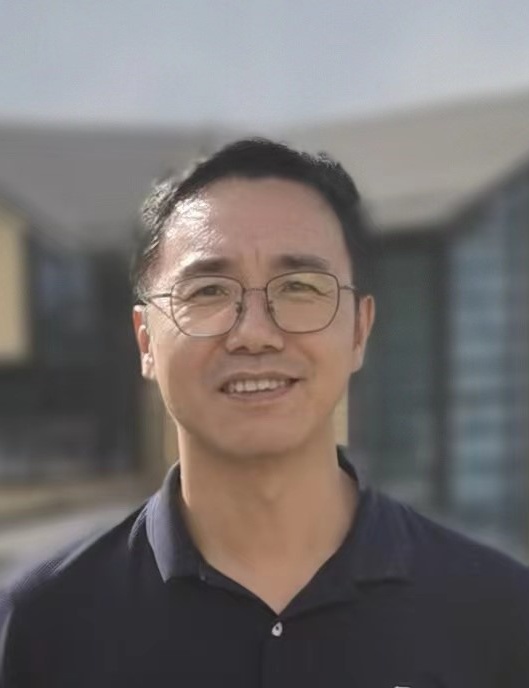
王勇
教授,博士生导师
职务: 清华大学深圳国际研究生院海洋工程研究院副院长
学科:海洋生态与环境
邮箱: wangyong@sz.tsinghua.edu.cn
地址: 深圳市南山区西丽大学城清华海洋楼1406
个人简历
教学
研究领域
研究成果
奖励荣誉
教育经历/Education
2001年1月-2004年4月,香港大学,生物信息学专业,博士
1997年9月-2000年6月,浙江大学,海洋生物技术专业,硕士
1993年9月-1997年7月,兰州大学,生物化学专业,学士
Sep. 1993 - Jun. 1997 BS in Biochemistry, Lanzhou University, China
Sep. 1997 - Jun. 2000 MS in Marine Biotechnology, Zhejiang University, China
Jan. 2001 - Apr. 2004 PhD in Molecular Evolution and Bioinformatics, The University of Hong Kong, Hong Kong SAR, China
工作经历/Professional Experience
2022年2月-至今,清华大学深圳国际研究生院,教授
2013年8月-2022年2月,中国科学院深海科学与工程研究所,研究员
2012年2月-2013年8月,香港科技大学,博士后
2008年12月-2012年2月,沙特阿卜杜拉国王科技大学,博士后
2008年1月-2008年10月,香港大学玛丽医院,高级研究助理
2004年5月-2007年12月,香港大学基因中心,博士后
2022/02 - present, Professor, Shenzhen International Graduate School, Tsinghua University, China
2013/08 - 2022/02, Senior Scientist, Institute of Deep Sea Science and Engineering, Chinese Academy of Sciences, China
2012/02 - 2013/08, Postdoctoral Fellow, Hong Kong University of Science and Technology, Hong Kong SAR, China
2008/12 - 2012/02, Postdoctoral Fellow, King Abdullah University of Science and Technology, Saudi Arabia
2008/01 - 2008/08, Senior Research Assistant, University of Hong Kong, Hong Kong SAR, China
2004/05 - 2007/12, Postdoctoral Fellow, The University of Hong Kong, Hong Kong SAR, China
学术兼职/Additional Positions & Editorial Board
中国海洋委员会-生物资源委员会委员;
面向2035年国家中长期科技发展规划专家组成员;
中国微生物学会第四届海洋微生物专业委员会委员;
Frontier Marine Sciences副主编;
Deep Sea Research I副主编;
Microorganisms编委;
eLife 客座编辑;
深圳市海洋生态前沿技术实验室主任
Additional Positions
Committee of Microbial Resource, Chinese Ocean Research Committee;
Member of the expert Group of the National Medium - and Long-term Scientific and Technological Development Plan for 2035;
Member of the 5th Marine Microbiology Committee of Chinese Society of Microbiology;
Director of Shenzhen Key Laboratory of Advanced Technology for Marine Ecology
Editorial Board
Editor of FEMS Microbiology Reviews
Editor of Marine Life Science and Technology
Associate editor of Deep Sea Research Part I
Associate Editor of Microorganisms
Guest editor of eLife
教学课程/Current Courses
海洋生态前沿与进展70460132 (2学分,32学时/年)
基因组数据处理算法和编程实现85991062 (2学分,32学时/年)
Progress and Development of Marine Biological Science 70460132 (2 credits, 32 hours/year)
Genomics data processing algorithms and programming implementation 85991062 (2 credits, 32 hours/year)
Ocean Humanities and Geology (2 credits, 8 hours/year)
Postdoc,Master’s & PhD Advising
Postdoc supervision: Zheng Pengfei, Alex Barcan, Loi Ngoyun, Zhong Song, Li Minchun
PhD candidates: Zhuobo Li, Yinghui He, Ai Chunhui, Du Yiling, Wang Haoran, Chen Jie, Liu Zhenhai, Zeng Zhikun, Pretty Falena Atmanda (joint supervisor)
Master candidates: Gao Shenqiang, Tan Li, Wang Yunning, Zhang Yunhao, Li Yuzhou, Chen Yizi
PhD graduates: Cui Guojie, Huang Jiaomei, Li Wenli, Wei Zhanwei, Zhang Hongxi, Li Qingmei, Zhou Yiling
Master graduates: Wu Yuzhi, Lu Rui, Wei Taoshu, Feng Ping, Xu Peikun, Chen Lin, Zhao Binghe, Zhang Jiushuang, Yang Yang, Yang Taoran
研究领域/Research
长期从事深海环境微生物基因组学研究和原位生态监测设备研发,推动深海原位生物研究成为科技部2035规划的13个深海前沿方向之一。其研究开启了深海生态系统原位研究和探测,主持和设计了我国首套原位生物实验室“凤凰”号。作为项目负责人主持中科院先导专项B海斗深渊生命科学研究项目和科技部重点研发专项项目。获得2016年度国家自然科学奖二等奖(排名3),并担任“海洋十年”行动计划海洋黄昏带联合调查大科学计划下西太平洋海洋黄昏带生态系统研究计划的负责人。在国际著名期刊NatureCommunications、NucleicAcidsResearch、ISMEJ、ScienceBulletin等共发表SCI学术论文和章节120余篇,授权中国发明专利5项。SCI论文总引用次数近8000次,大会报告和论文30余次。斯坦福大学全球高引前2%学者。担任FrontierMarineScience,Microorganisms和DeepSeaResearchI的副主编和编委,eLife客座编辑,担任面向2035年国家中长期科技发展规划专家组成员等公共服务职务。
Professor Wang has long been engaged in deep-sea environmental microbiology genomics research and the development of in-situ ecological monitoring equipment. He has played a key role in advancing deep-sea in-situ microbiological research, which has been incorporated into one of the 13 deep-sea frontier directions in the Ministry of Science and Technology of People’s Republic of China's 2035 plan. His work has pioneered in situ research and exploration of deep-sea ecosystems, and he has led the design and development of China's first in-situ biological laboratory, the Phoenix lander. As the principal investigator, he has led the Hadal Life Sciences Research Project (Strategic Priority Research Program of the Chinese Academy of Sciences, Category B) and the Ministry of Science and Technology’s Key Research and Development Program. He received the second prize of the 2016 National Natural Science Award (ranked 3) and was honored as an Innovation Leading Talent under the Thousand Talents Plan. He serves as the lead of the Twilight Zone of Western Pacific Ocean Ecosystem Research Program under the The UN Ocean Decade initiative. Professor Wang has published over 140 SCI papers and book chapters in prestigious international journals and holds >10 Chinese invention patents. His SCI papers have been cited nearly 9300 times, and he has delivered over 40 keynote presentations and papers at academic conferences. He is one of the top 2% highest cited scholars according to Standford University.
Projects
1.Shenzhen Key Laboratory of Advanced Ecological Techniques, 2024/01-2025/12.
2.Seed fund for deep-sea microbial research lab, 2022/04-2025/04, RMB5M.
3.National Science Foundation of China, No. 42376149, Methane source in Yongle Blue Hole and microbial mediated processes, 2024/01-2027/12
4.“Ten-Thousand Talents” programme, 2019/09-2022/09
5.Chinese Key Research and Development Program, 2016YFC0302500, Invention of in situ detection and sensor for study of deep-sea functional genes, 2016/07-2020/07
6.“One-Hundred Talents” programme, 2014/09-2018/09
7.National Science Foundation of China, No. 31460001, Metagenomics study on Jiaolong cold seep in northern South China Sea, 2015/01-2018/12
8.National Science Foundation of China, No. 41476104, Evaluation of hypervariable regions and conserved genes for taxonomic classification of microbes, 2015/01-2018/12
9.The Strategic Priority Research Program B of Chinese Academy of Sciences, No. XDB06010201, Biodiversity and adaptive strategies of hadal organisms. 2014/01-2018/12
代表性论文
1. Yong Wang*, Wenli Li, Qingmei Li, Yingli Zhou, Zhaoming Gao, Dong Feng. Deep-sea carbonates are a reservoir of fossil microbes previously inhabiting cold seeps. Front. Mar. Sci. 2021, 8: 698545.
2. Wenli Li, Xiyang Dong, Rui Lu, Pengfei Zheng, Dong Feng, Yong Wang.* Microbial ecology of sulfur cycling near the sulfate–methane transition of deep-sea cold seep sediments. Environ. Microbiol. 2021, 23: 6844-6858.
3. Yong Wang*, Wenli Li, Brett Baker, Yingli Zhou, Lisheng He, Antoine Danchin, Qingmei Li, Zhaoming. Carbon metabolism and adaptation of hyperalkaliphilic microbes in serpentinizing spring of Manleluag, the Philippines. Environ. Microbiol. Rep. 2022,14: 308-319
4. Yingli Zhou#, Paraskevi Mara#, Guojie Cui, Virginia Edgcomb, Yong Wang*. Microbiomes in the Challenger Deep slope and bottom-axis sediments. Nature Communications. 2022, 13: 1515
5. Pengfei Zheng, Zhanfei Wei, Yingli Zhou, Qingmei Li, Qi Zhi, Xiaoping Diao, Yong Wang*. Genomic evidence for the recycling of complex organic carbon by novel Thermoplasmatota clades in deep-sea sediments. mSystems. 2022, 00072-22.
6. Yong Wang*#, Hong-Yu Bi#, Hua-Guan Chen, Peng-Fei Zheng, Ying-Li Zhou, Jiang-Tao Li. Metagenomics reveals dominant unusual sulfur oxidizers inhabiting active hydrothermal chimneys from the Southwest Indian Ridge. Frontier in Microbiology, 2022, 13:861795.
7. Xiyang Dong#, Chuwen Zhang#, Yongyi Peng, Hong-Xi Zhang, Ling-Dong Shi, Guangshan Wei, Casey R J Hubert, Yong Wang*, Chris Greening. Phylogenetically and catabolically diverse diazotrophs reside in deep-sea cold seep sediments. Nature Communications, 2022, 13: 4885.
8. Ying-Li Zhou#, Paraskevi Mara#, Dean Vik, Virginia P Edgcomb, Matthew B Sullivan, Yong Wang*. Ecogenomics reveals viral communities across the Challenger Deep oceanic trench. Communications Biology, 2022, 5: 1055.
9. Yong Wang*, Jun Li, Zhanfei Wei, Qingmei Li, Yingli Zhou, Wenli Li, Jun Chen, Suixue Wang, Yongzhi Xin, Aiqun Zhang. In situ cultivation of deep-sea water with bicarbonate fueled a different microbial community. Acta Oceanologica Sinica, 2022, 41:1-7
10. Tao-Shu Wei, Zhao-Ming Gao*, Lin Gong, Qing-Mei Li, Ying-Li Zhou, Hua-Guan Chen, Li-Sheng He, Yong Wang*. (2023) Genome-centric view of the microbiome in a new deep-sea glass sponge species Bathydorus sp. Front. Microbiol. 2023, 14:1078171
11. Rulong Liu, Yong Wang*, Gordon Webster*. (2023) Microbiology of deep-sea carbon cycling. Frontiers in Microbiology, 14, 1236593.
12. Zhaoming Gao, Ting Xu, Huaguan Chen, Rui L, Jun Tao, Hongbin Wang, Jianwen Qiu*, Yong Wang*. (2023) Early genome erosion and internal phage-symbiont-host interaction in the endosymbionts of a cold-seep tubeworm. iScience, 26, 107033.
13. Hongxi Zhang, Taoshu, Jiushuang Zhang, Qingmei Li, Liang Fu, Lisheng He, Yong Wang*. (2024) Microbial mediation of cryptic methane cycle in semiclosed marine water column. The Innovation Geoscience, 2, 100082.
14. Hongxi Zhang, Taoshu Wei, Qingmei Li, Liang Fu, Manjie Li, Lisheng He, Yong Wang*. (2024) Metagenomic 18S rDNA reads revealed zonation of eukaryotic communities in the Yongle blue hole. Frontiers of Microbiology, 15, 1420899.
15. Binghe Zhao, Mucong Zi, Xiaoyu Zhang*, Yong Wang*. (2024) Microbial communities and metagenomes in methane-rich deep coastal sediments. Scientific Data, 11: 1043.
16. Zhuobo Li, Yinghui He, Hongxi Zhang, Haifeng Qian, Yong Wang* (2024) Biotransformations of arsenic in marine sediments across marginal slope to hadal zone. Journal of Hazardous Materials, 135955.
17. Ye, Z.C., Huang, J., Liang, Z.X., Liu, S., Lei, J.S., Deng, S.H., Zheng, B., Hong, C.P., Wang, Y., Wang, X.X., Gao, Q., Yang, Y.F.*. (2024) A case study showing highly traceable sources of bacteria on surfaces of university buildings. Ecotoxicology and Environmental Safety. 281: 116632
18. Yang, T.R., He, Y.H., Yang, M., Gao, Z.M., Zhou, J.*, Wang, Y.* (2024) Community Structure and Biodiversity of Active Microbes in the Deep South China Sea. Microorganisms. 12(11): 2325.
19. Wang, Y.*, Du, Y.L. (2025) Hypothesis for molecular evolution in the pre-cellular stage of the origin of life. WIREs RNA. 16: e70001.
20. Y He, H Zhang, F Baltar, Y Wang*. (2025) Transcriptional difference of deep-sea microorganisms under different sampling methods. Environmental Science & Technology. 59, 23, 11653–11665.
21. J Zhang, Y Wang* (2025) A video dataset for hadal snailfish along with the benchmark. Deep Sea Research Part I: Oceanographic Research Papers, 223: 104517.
22. Wu M, Zhang T, Han S, Huan S, Jiang Y, Wang Y, Cai Z, Zhou J.* (2025) structure and function features of abundant and rare prokaryotic communities along nearshore to offshore transitions. Environ Microbiol. 27(7):e70144.
23. Li Y-H, Yang M, Wei T-S, Chen H-G, Gong L, Wang Y and Gao Z-M (2025) Survival strategies for the microbiome in a vent-dwelling glass sponge from the middle Okinawa Trough. Front. Microbiol. 16:1636046
24. Li, Z.B., Wei, T.S., He, L.S., Qian, H.F., Zhu, Y.G., Wang, Y.* (2025) Genomic potential for mercury biotransformation in marine sediments across marginal slope to hadal zone. Nature Communications, 16:8655.
25. Yang, M. Zhang, H.X., Zhou, Y.L., Selvarajan, R., Xu, P.K., Gao, Z.M., Wang, Y.* (2025) Viral ecogenomics across oxic and anoxic zones of the Yongle Blue Hole. Environmental Microbiome, 20:119.
26. He, Y.H., Baltar, F. Wang, Y.* (2025)¬ Seasonal variability in community structure and metabolism of active deep-sea microbes. ISME Journal, 19: wraf124.
27. Li, Q.M., He, L.S.*, Wang, Y.* (2026) Small proteins from prokaryotes in marine water column at full ocean depth. iScience, 29: 114585.
28. Li, Z.B., Zhang, H.X., Wei, T.S., He, L.S., Wang, Y.* (2026) Anoxia-adapted Cyanobacteria in a marine blue hole. Appl. Env. Microbiol. e02576-25
29. Chen, Y.Z., Barcan, A.S. Zhang, J.S., Li, J., He, L.S., Wang, Y. *(2026) In situ swimming behavior of the Mariana snailfish Pseudoliparis swirei. Scientific Reports. 16: 17487.
30. Zhong, S. , Zhao, B.H., Gao, S.Q., Ai, C.H., Zhang, X.Y., Wang, Y. (2026) The key role of bathyarchaeota in methane metabolism within coastal ecosystems. Environmental Technology & Innovation, 43: 104991.
31. Barcon, R. A., Carradori, S.*, Samsing, F., Nguyen, N.L., He, L. S., Wang, Y., Barcon, A. (2026) Machine Learning in Applied Microbiology, from Data Quality to Model Validation and Implementation. Microbiological Research, 311: 128588.
32. Ai, C. H., He, L. S., Wang, Y.* (2026) Correlation of Long Non-Coding RNAs and Gene Expression in Response to Reverse Development of Turritopsis dohrnii. Marine Biotechnology, 28: 142.
33. Barcan, A., Barcan, R. He, L.S., Wang, Y.*(2026) Hadal trench microbiomes as models of extreme adaptation and ecosystem function. Communications Earth and Environment, 7: 686.
34. Du, Y.L., He, Y.H., Barcan, A., Wang, Y.N., Tan, L. Baltar, F., Wang, Y.* (2026) Omics insights: in situ tools shed light on deep-sea microbial activities. Ocean, 2:
荣誉奖项
(1) 2016年度国家自然科学二等奖(Z-104-2-03)
(2) 2017年度国家科技部“中青年创新领军人才”
(3) 2018年度“湖藻与海洋学会”年度十大进展提名
(4) 中国科学院“百人计划”终评优秀奖
(5) 海南省“杰出人才”称号
(6) 深圳市鹏城学者A类